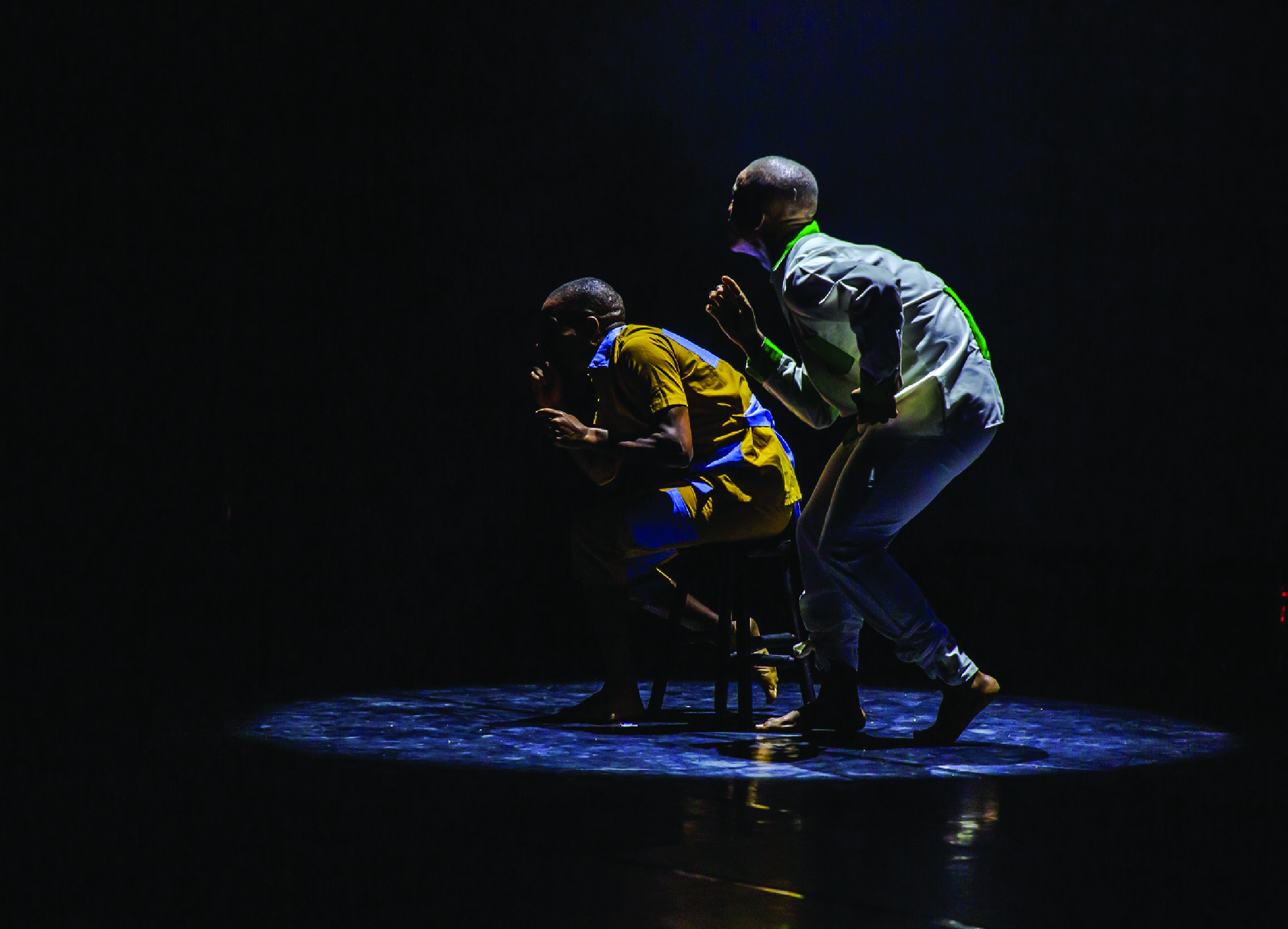
UJ Arts & Culture welcomes the 4th edition of the ITROTRA–MAP Dance Festival to the UJ Arts Centre this March, as part of a city-wide programme unfolding across Soweto and Johannesburg from 27 February to 7 March 2026.
Presented by ITROTRA Art X Connection (IAXC) in partnership with leading South African and international cultural institutions, and funded by the Barloworld Empowerment Foundation, the Festival is hosted by UJ Arts & Culture, The Market Theatre, Alliance Française of Johannesburg, Goethe-Institut South Africa, Bapedi Hall (Soweto), and selected schools. It continues to affirm its role as a vital Mobile Art Platform (MAP), connecting artists, audiences, and communities through movement, dialogue, and social engagement.
The 2026 edition unfolds under the resonant theme, “SAFE SPACES, SAFE LIVES”. Anchored in the conviction that a clean environment is a human right — and so is the right to live free from violence — ITROTRA–MAP Dance Festival positions contemporary dance as a catalyst for social reflection, resistance, healing, and transformation.
A Festival with a Voice
Through performances, films, workshops, flash mobs, exhibitions, and public conversations, the festival confronts urgent realities including gender-based violence and femicide (GBVF), environmental justice, masculinity, mental health, and human dignity. Across disciplines and geographies, artists respond to contemporary pressures with works that are both intimate and politically aware.
Rooted in the legacy of the ITROTRA International Contemporary Dance Festival of Madagascar, now in its 20th international edition, the South African chapter strengthens Afro-global artistic exchange, bringing together artists from South Africa, Madagascar, Mozambique, Sweden, France, and Germany.
‘Dance transcends borders and languages, offering a powerful medium through which stories are shared, heritage is preserved, and new futures are imagined. The University of Johannesburg is proud to support a platform where local and continental artists can connect, create, and inspire diverse audiences. Through partnerships such as ITROTRA, we continue to advance our vision of positioning UJ as a leading hub for Pan-African excellence in the arts,’ says Pieter Jacobs, Head of UJ Arts & Culture.
The Programme at the UJ Arts Centre
The festival’s presence at UJ unfolds across two distinct performance encounters. On 2 and 3 March at 11h00, Tvärslöjd – Circus (Sweden) invites young audiences into a world shaped by imagination and playful invention. Performed by Elaine Briant and Jean-Hicham Rahmoun, and directed by Viktoria Dalborg, the work is built around choreography developed by Dalborg alongside Axel Adlercreutz and Jenny Soddu.
With music by Hans Appelqvist and scenography and costume by Ellen Utterström, the performance transforms ordinary, old-fashioned objects into tools of creative exploration. The narrative remains deliberately open-ended, encouraging children to interpret freely — whether the performers inhabit a giant paint bucket, a hidden room, or a magical forest. At its core, the work celebrates curiosity and the boundless possibilities of imagination.
On 6 March at 19h00, a compelling Triple Bill brings together three choreographic voices that speak directly to the festival’s thematic concerns.
Mozambican artist Pak Ndjamena (Bernardo Guiamba) presents Deus Nos Acudi, a work in which concept, choreography, and performance converge in a searching inquiry into the body’s place within local and global realities. Framed by lighting design from Caldino Alberto, the piece interrogates consumerist societies, belief systems, secular religiosity, and myth, examining how ritual and ideology intersect with everyday life and systems of power.
In The Convincer, choreographed by Tshepo Molusi and performed by Vuyani Dance Theatre, the stage becomes a site of psychological and emotional negotiation. Performed by an ensemble of eight dancers, the work explores the silent battles faced by individuals living with schizophrenia and their families, revealing the tension between internal chaos and outward composure.
The evening concludes with #MOI – Female Ensemble, conceived, choreographed, and directed by Gaby Saranouffi under the banner of ITROTRA Art X Connection. Performed by Phumzile Mkhwanazi, Masego Moloto, Mapuleng Mohosho, Noni Xaba, and Nqobile Zulu, the work confronts violence against women and children with urgency and clarity. It moves between devastation and reclamation, positioning the body as both witness and site of resistance.
Together, these performances reflect the festival’s broader commitment to artistic excellence and social engagement — where movement becomes testimony, dialogue, and collective reflection.
The festival runs from: 27 February – 7 March 2026
At the UJ Arts Centre:
2 March 2026 | 11h00 (Tvärslöjd?– Circus | Sweden)
3 March 2026 | 11h00 (Tvärslöjd?– Circus | Sweden)
Tickets: https://www.quicket.co.za/events/360600-tvrsljd-circus-sweden/?ref=organiser-profile#/
• 6 March 2026 | 19h00 (Triple Bill)
Venue:
Keorapetse William Kgositsile Theatre, UJ Arts Centre, Auckland Park
|
About UJ Arts and Culture UJ Arts & Culture, a division of the Faculty of Art, Design & Architecture (FADA) produces and presents world-class student and professional arts programmes aligned to the UJ vision of an international university of choice, anchored in Africa, dynamically shaping the future. A robust range of arts platforms are offered on all four UJ campuses for students, staff, alumni and the general public to experience and engage with emerging and established Pan-African and international artists drawn from the full spectrum of the arts. In addition to UJ Arts & Culture, FADA (www.uj.ac.za/fada) offers programmes in eight creative disciplines, in Art, Design and Architecture, as well as playing home to the NRF SARChI Chair in South African Art & Visual Culture, and the Visual Identities in Art & Design Research Centre. The Faculty has a strong focus on sustainability and relevance, and engages actively with the dynamism, creativity and diversity of Johannesburg in imagining new approaches to art and design education. |
|---|